Quill & Page Writing House Home

Category

Craft & Technique

25 articles

When Someone Else's Numbers Become Your Noise: Protecting Creative Momentum From the Metrics That Distort It

When Someone Else's Numbers Become Your Noise: Protecting Creative Momentum From the Metrics That Distort It

In an industry increasingly fluent in data—sales rankings, follower counts, advance announcements—writers face a peculiar and underexamined threat: the slow erosion of creative confidence through constant comparison. This article examines how external metrics infiltrate a writer's interior practice and offers concrete strategies for reclaiming the focused, authentic work that no algorithm can replicate.
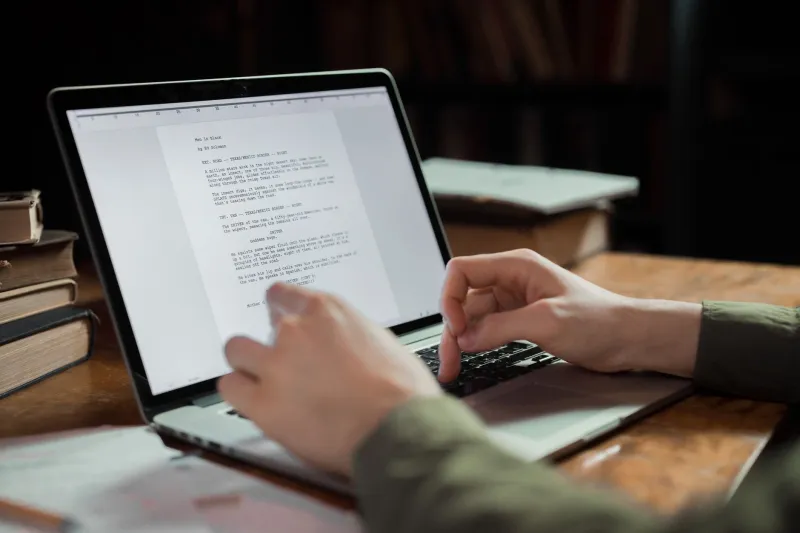

The Space Between the Page and the Dream: What Your Unfinished Manuscript Is Still Trying to Tell You

The Space Between the Page and the Dream: What Your Unfinished Manuscript Is Still Trying to Tell You

That half-written manuscript in your drawer is not necessarily a monument to failure — it may, in fact, be one of the most honest documents you have ever produced. Understanding the difference between a story that is dormant and one that is truly dead can reshape how you approach every project you have ever set aside. This piece examines the quiet intelligence embedded in unfinished work and offers a framework for deciding which manuscripts deserve a second life.

Interrogating Your Own Story: The Art of Asking Questions That Unlock What Your Draft Is Hiding

Interrogating Your Own Story: The Art of Asking Questions That Unlock What Your Draft Is Hiding

The most productive conversations a writer can have may not be with a critique partner or editor, but with the manuscript itself. Strategic self-interrogation—posing precise, probing questions at key moments in the drafting process—can surface hidden character motivations, structural weaknesses, and thematic threads that no outline or brainstorm session will ever reveal. This article offers a practical framework for becoming your own Socratic dialogue partner.

One Line That Rewrites Everything: Discovering the Pivot Sentence Hidden in Your Draft

One Line That Rewrites Everything: Discovering the Pivot Sentence Hidden in Your Draft

Every writer who has spent enough time in the middle of a difficult manuscript knows the peculiar sensation of writing a sentence that suddenly illuminates everything around it. This phenomenon—the pivot sentence—is neither accident nor miracle, but a recoverable, repeatable creative event. Understanding how it works may be the most useful thing a stuck writer can do.

Talking Back to the Page: The Art of Annotating Your Own Drafts Across Time

Talking Back to the Page: The Art of Annotating Your Own Drafts Across Time

When a writer returns to an earlier draft with pen in hand, something more profound than editing begins to unfold — a genuine conversation across time. Annotating your own manuscript history is less a corrective exercise than an act of creative archaeology, one that reveals how your instincts, blind spots, and ambitions have shifted between versions. This piece examines why treating past drafts as dialogue partners rather than failures to be overwritten can fundamentally deepen the revision proc

Before Chapter One Begins: Rethinking Whether Your Prologue Is Earning Its Place

Before Chapter One Begins: Rethinking Whether Your Prologue Is Earning Its Place

Prologues are among the most debated structural choices in fiction, championed by some writers as essential framing devices and quietly skipped by a significant portion of readers. Understanding when a prologue genuinely serves your narrative—and when it quietly signals a deeper structural problem—can be the difference between a compelling opening and one that loses readers before the story truly begins.

The Invisible Architecture: How Solitary Writers Build Teams That Shape Every Page

The Invisible Architecture: How Solitary Writers Build Teams That Shape Every Page

Writing may be a solitary act, but the finest manuscripts rarely emerge from a single mind working in complete isolation. Discover how contemporary authors are assembling sophisticated creative ecosystems—beta readers, sensitivity readers, developmental editors, and subject-matter consultants—that quietly shape a work without ever threatening the writer's essential voice. Learning to orchestrate these relationships strategically may be the most underestimated craft skill a serious author can dev

Before They Read Word One: Decoding the Silent Promises Every Book Makes to Its Reader

Before They Read Word One: Decoding the Silent Promises Every Book Makes to Its Reader

Long before a reader encounters your first sentence, your book has already made a series of commitments on your behalf. Understanding these unspoken agreements—forged through genre signals, cover design, and opening pages—is one of the most underestimated skills a writer can develop. Breaking them accidentally invites disappointment; breaking them deliberately can produce something genuinely unforgettable.

What Your Avoidance Already Knows: Decoding the Intelligence Hidden in Writer's Block

What Your Avoidance Already Knows: Decoding the Intelligence Hidden in Writer's Block

When a writer cannot bring themselves to open the manuscript, the instinct is to diagnose the problem as discipline or motivation. But resistance to the page is rarely as simple as laziness—it is, more often, a form of creative intelligence signaling something worth hearing. Learning to read that signal transforms one of writing's most frustrating experiences into one of its most useful diagnostic tools.

Beyond the Feedback Form: What Writing Groups Must Become to Actually Matter

Beyond the Feedback Form: What Writing Groups Must Become to Actually Matter

Most writing groups begin with genuine enthusiasm and dissolve into polite irrelevance within months. The problem is rarely a shortage of talent or commitment — it is a fundamental misunderstanding of what a writing community is actually built to do. This article examines the structural and psychological conditions that allow writing groups to move past performative encouragement and into the kind of honest, generative exchange that genuinely advances a writer's craft.

The Manuscript That Never Closes: Rethinking Abandoned Drafts as Ongoing Creative Laboratories

The Manuscript That Never Closes: Rethinking Abandoned Drafts as Ongoing Creative Laboratories

Most writers treat an unfinished novel as evidence of failure — a project shelved in shame, awaiting the motivation that never quite arrives. But a growing number of serious authors are discovering that incomplete manuscripts carry a different kind of value entirely: they function as permanent creative laboratories, capable of teaching, evolving, and informing new work long after the last active writing session. This article challenges the rigid binary between finished and unfinished, and argues

When Less Becomes More: The Liberating Power of Creative Constraints

When Less Becomes More: The Liberating Power of Creative Constraints

The notion that total creative freedom produces the best writing is one of the most persistent myths in literary culture. Counterintuitively, the most generative breakthroughs often emerge not from boundless possibility, but from deliberate limitation. This article examines why constraints ignite imagination and offers practical frameworks for writers ready to harness restriction as a creative tool.

Why the First Page Terrifies You More Than the Last: Dismantling the Mythology of Beginnings

Why the First Page Terrifies You More Than the Last: Dismantling the Mythology of Beginnings

The blank page at the start of a novel carries a psychological weight that no other point in the writing process quite matches — and that weight is largely self-imposed. Understanding why beginnings feel so disproportionately daunting is the first step toward releasing their grip. This piece unpacks the mental architecture of writer's paralysis and offers concrete frameworks for moving past it.

From Pastime to Purpose: Identifying the Turning Point That Transforms a Writer

From Pastime to Purpose: Identifying the Turning Point That Transforms a Writer

Every serious writer can point to a specific moment when the act of putting words on a page shifted from leisurely pursuit to something far more urgent and deliberate. These inflection points rarely announce themselves with fanfare, yet they quietly restructure a writer's entire relationship with the craft. Understanding how to recognize and honor your own turning point may be the most consequential thing you do for your literary future.

What's in a Name, Really: The Craft and Psychology of Naming Characters Who Feel Real

What's in a Name, Really: The Craft and Psychology of Naming Characters Who Feel Real

A character's name is often the first contract a writer makes with a reader — and like any contract, the wrong terms create friction before the story even begins. This piece examines the linguistic, psychological, and practical dimensions of character naming, offering writers a framework for understanding why some names feel inevitable and others quietly undermine an entire manuscript.

Read Like a Writer, Write Like a Reader: The Generative Power of Annotation

Read Like a Writer, Write Like a Reader: The Generative Power of Annotation

Most writers treat annotation as a corrective tool — something reserved for manuscript cleanup or academic close reading. But the practice of marking up texts, whether borrowed library books, research materials, or your own drafts, can function as one of the most generative habits in a writer's repertoire. When approached with creative intention, the margins of a page become a laboratory for voice, structure, and story.

Borrowed Habits, Broken Practice: Why Adopting Another Writer's Process Often Backfires

Borrowed Habits, Broken Practice: Why Adopting Another Writer's Process Often Backfires

Every writing memoir and author interview offers an implicit promise: follow this routine and the words will come. Yet for most writers, attempting to transplant someone else's creative habits into their own life produces frustration rather than pages. Understanding why process envy is so seductive—and so consistently counterproductive—is the first step toward building a practice that actually belongs to you.

Studying the Bestseller List Without Becoming a Copy of It

Studying the Bestseller List Without Becoming a Copy of It

Every serious writer is told to read widely within their genre—yet few warnings accompany that advice. When admiration quietly becomes imitation, the voice you have spent years cultivating can dissolve into an echo of someone else's success.

Before the First Word: The Hidden Work That Separates Finished Novels From Forever-Drafts

Before the First Word: The Hidden Work That Separates Finished Novels From Forever-Drafts

The romantic image of a writer sitting down to a blank page and producing something extraordinary is largely a myth—and a damaging one at that. Experienced authors understand that the real work of a novel begins long before the first sentence is typed. This piece examines the preparatory frameworks, mental rituals, and structural exercises that transform the daunting void of a new project into a foundation solid enough to build upon.

No Two Writers Edit Alike: Building an Editing System That Actually Fits Your Creative Brain

No Two Writers Edit Alike: Building an Editing System That Actually Fits Your Creative Brain

Revision is where manuscripts are truly made, yet most writers inherit editing habits from workshops or writing guides that were never designed with their particular mind in mind. This piece examines the wildly different revision philosophies working authors have developed over time and offers a practical framework for designing a system that honors both your creative instincts and your daily schedule.

Writing Through the Doubt: How Authors at Every Level Confront the Fraud Within

Writing Through the Doubt: How Authors at Every Level Confront the Fraud Within

Imposter syndrome does not discriminate by word count, publication history, or critical acclaim — it shadows debut novelists and bestselling authors alike. This piece examines why the creative writing life is particularly fertile ground for self-doubt, and what cognitive strategies working authors actually employ to keep writing anyway. Understanding the pattern may be the most important revision a writer ever makes.

Letting the Manuscript Rest: The Science and Art of Stepping Away to Write Better

Letting the Manuscript Rest: The Science and Art of Stepping Away to Write Better

Stepping away from your manuscript is not procrastination—it is one of the most deliberate and productive choices a writer can make. Drawing on insights from neuroscience and the habits of working authors, this piece examines why distance is often the missing ingredient in a revision process. Learn how to determine the right length of pause and return to your pages with the clarity your story deserves.

When Characters Speak But Nobody Listens: Rescuing Flat Dialogue From the Page

When Characters Speak But Nobody Listens: Rescuing Flat Dialogue From the Page

Wooden, lifeless dialogue is one of the most common reasons readers abandon a manuscript — yet most writers do not recognize it in their own work. This guide breaks down the structural and psychological roots of artificial-sounding speech and offers concrete, example-driven strategies for writing conversations that feel genuinely human.